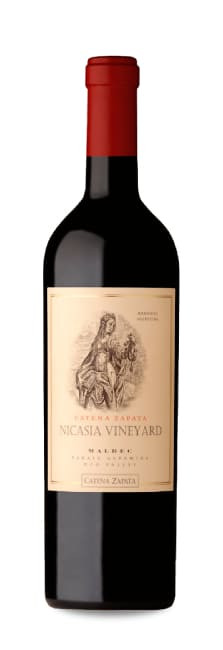
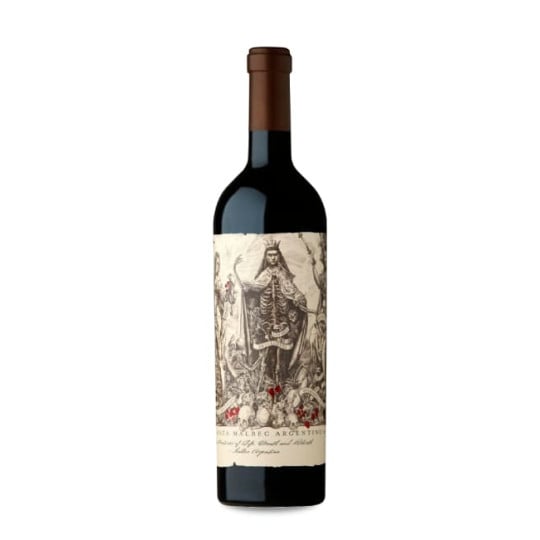
In the beginning, Nicolás Catena harboured doubts. Unlike his father Domingo and his grandfather Nicolás, who were staunch believers in the great potential of malbec, he was not entirely convinced that this native Argentine variety could rival the finest cabernet sauvignon on the market, most of which were French. However, all his concerns were dispelled when his high-altitude cultivated malbec delighted the most discerning critics. This was the ultimate reward to continue producing single varietals like Catena Zapata Nicasia Vineyard, a red wine crafted in the only vineyard in Mendoza developed from proprietary clones.
That this malbec can be savoured today is nearly miraculous, considering Nicolás's initial hesitation (which was considerable) and the local viticulturists' advice urging him to abandon his pursuit of quality at high altitudes (in the case of Catena Zapata Nicasia Vineyard, at 1,095 metres above sea level). Fortunately, Nicolás turned a deaf ear to these suggestions and persisted, taking the helm of Catena Zapata, the family winery, which was experiencing a challenging period. Argentina's economic and political turmoil, with a military government heading towards war with the United Kingdom over the Falkland Islands, led to a decline in wine sales. Yet, Nicolás Catena managed to recover. He now understood that success lay in every cluster of malbec; but where would he find the right clones?
Thus, from their oldest vineyards, Catena Zapata developed its own clonal selection, which was employed in the Nicasia vineyard, located in the Altamira region, south of the La Consulta district. This area, favoured by his father Domingo, boasts a blend of clay soils with gravel and large oval stones of volcanic origin, ensuring proper water drainage (preventing moisture retention and the proliferation of fungal diseases like botrytis).
Catena Zapata Nicasia Vineyard is harvested and transported to the winery, where only a portion of the clusters will be processed. The number of clusters to be destemmed and those to be vinified whole will depend on the characteristics of each vintage. These grapes are manually transferred into open French oak barrels, where Catena Zapata Nicasia Vineyard will ferment for 17 days at low temperatures. During this period, manual punch-downs are crucial before the onset of malolactic fermentation. Once both fermentations are complete, Catena Zapata Nicasia Vineyard will age for a couple of years in French oak barrels and another couple of years in the bottle.
Catena Zapata Nicasia Vineyard is an elegant and unique red wine that must be tasted without fail. It is likely to have its detractors (as with all things in life), but follow Nicolás Catena's example: ignore them and trust your instincts. With Catena Zapata Nicasia Vineyard, you are sure not to regret it.




 Red wine
 White wine
 Rosé wine
 Wines in Primeur
 Sherry and Port wine
 Sweet wine
 Orange wine
 Vermouth
 Champagne
 Cava
Cava Prosecco
 Lambrusco
 Crémant
 Moscato d'Asti
 Franciacorta
 Pet-Nat
 Corpinnat
 Other sparkling wines
 Rhum
Rhum Gin
Gin Whisky
 Vodka
Vodka Cognac
 Brandy
 Pastis
 Tequila
 Mezcal
 Grappa and Eau de vie
 Calvados
 Liqueurs
 Pacharán
 Apéritifs
 Wine gift boxes
 Boxed wines
 Boxed sparkling wines
 Wine bottles and glasses
 Gift card
 Non alcoholic Wine
 Non alcoholic Sparkling wine
 Aromas
 Wine conservation
 Decanters and aerators
 Bottle identifiers
 Corkscrews
 Service
 Glass identifiers
 Cleaners
 Accessories set
 Wine glasses
 Contact


 Mendoza


 Attention
