


 Red wine
 White wine
 Rosé wine
 Wines in Primeur
 Sherry and Port wine
 Sweet wine
 Orange wine
 Vermouth
 Champagne
 Cava
Cava Prosecco
 Lambrusco
 Crémant
 Moscato d'Asti
 Franciacorta
 Pet-Nat
 Corpinnat
 Other sparkling wines
 Rhum
Rhum Gin
Gin Whisky
 Vodka
Vodka Cognac
 Brandy
 Pastis
 Tequila
 Mezcal
 Grappa and Eau de vie
 Calvados
 Liqueurs
 Pacharán
 Apéritifs
 Wine gift boxes
 Boxed wines
 Boxed sparkling wines
 Wine bottles and glasses
 Gift card
 Non alcoholic Wine
 Non alcoholic Sparkling wine
 Aromas
 Wine conservation
 Decanters and aerators
 Bottle identifiers
 Corkscrews
 Service
 Glass identifiers
 Cleaners
 Accessories set
 Wine glasses
 Contact

Natural Wines
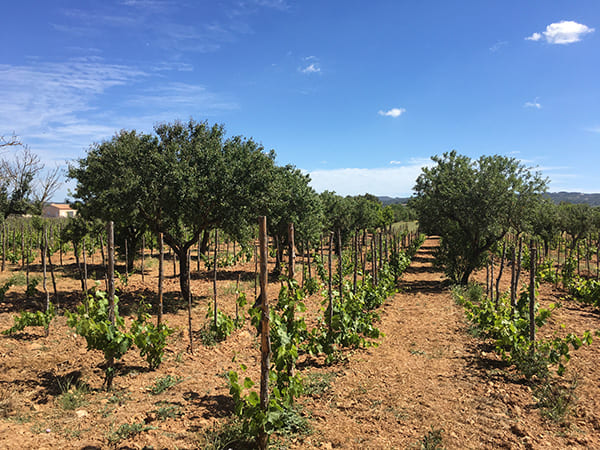
Natural wine is one of the most ambiguous and difficult terms to define the world of wine. You might want to take a seat since this is not an easy topic to discuss.
What defines a natural wine? Being very strict, it is almost impossible to make a completely natural wine since the transformation from grapes to wine is made by us, which is why this term creates the basis for many and very long discussions. However, it is true that there are several techniques and elaboration methods that allow winemakers to produce their wines as natural as possible. Therefore the foundation of elaborating natural wines always lies in the philosophy of the winemaker.
Respect towards the environment and crafts are significant in the concept of ‘natural wine’. Traditional elaboration methods are implemented again and no synthetic fertilizers are used during the elaboration processes. In fact, the movement emerged from the need to recover the damaged soils and the biodiversity in the vineyards, which had suffered and lost quality during the years of industrial farming.
The natural wine revolution began in Beaujolais which was under a lot of influence by the industrialization of vineyards and modern oenology. Jules Chauvet (1907-1989) a studied physicist and biologist but also a great wine lover, started to produce wines without using any synthetic products. At the University of Lyon he had studied the impact of several yeast types on wine. The results clarified the relationship between organic cultivation, the soils, the huge variety of yeasts and the wide range of natural aromas in wines. He discovered that the sulphurisation before the fermentation eliminated a lot of the yeast and therefore a part of the wine’s character. He also analysed the different ways of fermenting, such as the carbonic maceration or the malolactic fermentation. Chauvet applied his knowledge and instead of elaborating common wines, he started elaborating natural wines.
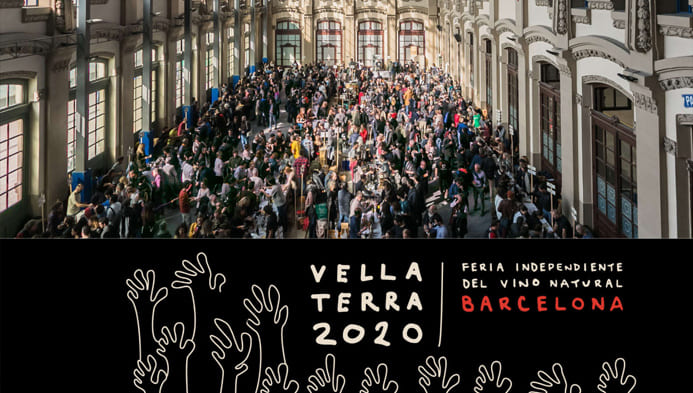
Then several people showed their interest in his way of cultivating and elaborating. For example his neighbour, Marcel Lapierre, who in 1980 carried out his own oenology studies on several vintages and then joined the movement, following the principles of his idol Chauvet. Then followed Pierre Overnoy in 1984 and he started to vinify without adding any oenological products to the wine. In the regions of Rhone, Loire and Languedoc more and more people started to join them and nowadays there are many fairs dedicated to natural wines and more and more wine lovers have discovered those wines.
Also in Spain the natural wine movement has many followers even though it can still be considered a new trend. Around 2007 several winemakers, inspired by their French neighbours, adopted this way of elaborating. Laureano Serres (Mendall) in Terra Alta, Joan Ramón Escoda in Conca de Barberà and Manuel Valenzuela (Barranco Oscuro) in the Alpujarras of Granada started to introduce natural wines step by step to the Spanish wine industry.
More and more Spanish winemakers are taking a step forward towards natural elaboration. They cultivate using ecological techniques and control their elaboration processed. Right now we are all in a process of learning since this is not a science but requires many years of attention, analysis and intuition. We have to listen to our vineyards and then represent what they say in to elaboration methods.
We are going through an interesting era in the world of wine. This movement has surprised the foundations of modern agriculture and oenology and is recovering old customs, combining them with new methods and knowledge. New colours, aromas and flavours are entering the world of natural wines.