


 Red wine
 White wine
 Rosé wine
 Wines in Primeur
 Sherry and Port wine
 Sweet wine
 Orange wine
 Vermouth
 Champagne
 Cava
Cava Prosecco
 Lambrusco
 Crémant
 Moscato d'Asti
 Franciacorta
 Pet-Nat
 Corpinnat
 Other sparkling wines
 Rhum
Rhum Gin
Gin Whisky
 Vodka
Vodka Cognac
 Brandy
 Pastis
 Tequila
 Mezcal
 Grappa and Eau de vie
 Calvados
 Liqueurs
 Pacharán
 Apéritifs
 Wine gift boxes
 Boxed wines
 Boxed sparkling wines
 Wine bottles and glasses
 Gift card
 Non alcoholic Wine
 Non alcoholic Sparkling wine
 Aromas
 Wine conservation
 Decanters and aerators
 Bottle identifiers
 Corkscrews
 Service
 Glass identifiers
 Cleaners
 Accessories set
 Wine glasses
 Contact

Interview with Meritxell Juvé, CEO of Juvé & Camps
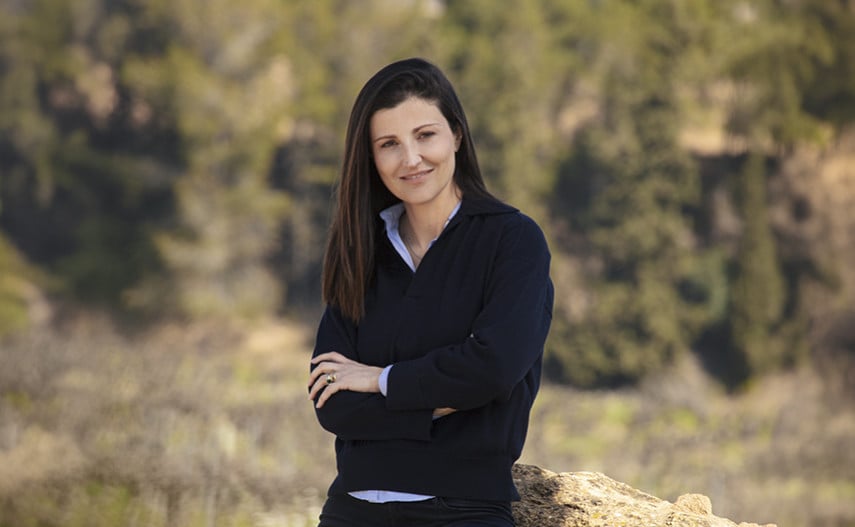
We had previously visited Espiells, the estate at the heart of Juvé & Camps, in Sant Sadurní d’Anoia (Penedès), surrounded by vineyards that stretch out at the foot of the winery, where the distance between the vine and the vat is measured in mere metres. However, this time the visit held a different significance.
On April 1st, the historic house of Sant Sadurní d’Anoia made headlines in the Spanish wine industry by announcing its departure from the DO Cava to join the collective brand Corpinnat. An unexpected yet significant move that stirred the sector and made this return inevitable. We sought to understand the reasoning behind a decision that had been years in the making and that, for a family with seven generations of history in Penedès, went far beyond a mere change of label.
Meritxell Juvé, CEO and fourth generation of the winery, greets us with ease, showing no sign of exception. She is accustomed to interviews; since the news broke, her schedule has scarcely allowed for silence. She speaks fluently, with the precision of someone who has had to explain the same decision many times without losing nuance along the way.
When origin ceases to be just a word
The morning is clear in Espiells, and the landscape silently accompanies the conversation. Before terms like denominations, strategies, or positioning appear, a word emerges that will define the entire interview: origin.
It is not uttered as a commercial slogan or a rehearsed response. It arises naturally, associated with the land, the native varieties, the people who work the vineyard, and a very specific way of understanding wine. Perhaps because, in the case of Juvé & Camps, speaking of origin is speaking of seven generations cultivating the same territory.
As the conversation progresses, everything returns time and again to the vineyard. To decisions made decades ago that still weigh on the present, to family stories hidden behind each plot, to a childhood surrounded by vines, harvests, and conversations where wine was part of everyday life. "Wine is not just wine; it's all the history behind it," she explains.
Therefore, when she talks about joining Corpinnat, the collective brand of quality sparkling wines in Penedès, she does not speak in terms of rupture. She describes it rather as a logical consequence of a way of working that has barely changed over time. "We've always done the same thing. But today we feel more aligned with Corpinnat."
A decision deliberated over for years
From the outside, the announcement was experienced as a genuine earthquake. Few wineries have the specific weight of Juvé & Camps within the universe of quality sparkling wines, and few decisions have generated so much conversation in such a short time.
She, however, claims she did not expect such media impact. When asked about it, she smiles with a hint of incredulity before explaining that the decision is the result of countless meetings, family discussions, and hours of reflection. "When the third and fourth generations agree, it means the decision is moving forward."
At no point are there reproaches towards DO Cava. Quite the opposite. The gratitude is constant and sincere. "We are what we are thanks to Cava. We are very grateful because we have come this far being Cava, and we do not wish to harm anyone."
The phrase sums up the tone of the entire conversation: firmness without confrontation, conviction without resentment. Her father, she explains, always prioritized the brand over any personal interest and understood that this was the most sensible step for the future of the winery. A difficult decision, precisely because of the emotional weight that Cava holds in the family history.
The incorporation of Juvé & Camps also represents a significant boost for Corpinnat. The winery produces practically the same volume as the rest of the collective brand members combined, a presence that notably enhances the project's visibility without altering its fundamental approach.
Building value for future generations
Throughout the interview, one idea persistently reappears: the need to think long-term. "We cannot expect everything to change overnight. We need time, and things will eventually fall into place."
The reflection goes beyond administrative or institutional matters. What truly concerns her is how to build value for the territory and for those who make it possible. That is why she speaks of the farmer with almost the same intensity as she speaks of origin. "The price of grapes must be improved. Without raw material, there is no culture, and without culture, there is no wine."
The phrase encapsulates much of what Corpinnat seeks to defend: revaluing work in the field, focusing on native varieties, and advocating for a territory that, in her opinion, has everything necessary to establish itself among the great wine regions of the world.
But wine, as she herself recalls during the conversation, never speaks solely of places. It also speaks of people. Hence, when thinking about the most beautiful aspect of her work, she does not mention awards or recognitions. She talks about the stories people share with her. Toasts that linger in memory long after the bubbles have vanished. "Wine serves for sorrows and glories, but sparkling wine is especially linked to joys."
As the interview concludes, she checks the time and apologizes. She must leave. She is not heading to a meeting, a presentation, or a tasting, but to her other job: her children.
As we watch her depart, it is hard not to think that perhaps the true strength of projects like this lies there. In people who understand that building a legacy is not just about crafting great wines, but about nurturing what will allow someone, seven generations from now, to speak of origin with the same conviction.