



 Red wine
 White wine
 Rosé wine
 Wines in Primeur
 Sherry and Port wine
 Sweet wine
 Orange wine
 Vermouth
 Champagne
 Cava
Cava Prosecco
 Lambrusco
 Crémant
 Moscato d'Asti
 Franciacorta
 Pet-Nat
 Corpinnat
 Other sparkling wines
 Rhum
Rhum Gin
Gin Whisky
 Vodka
Vodka Cognac
 Brandy
 Pastis
 Tequila
 Mezcal
 Grappa and Eau de vie
 Calvados
 Liqueurs
 Pacharán
 Apéritifs
 Wine gift boxes
 Boxed wines
 Boxed sparkling wines
 Wine bottles and glasses
 Gift card
 Non alcoholic Wine
 Non alcoholic Sparkling wine
 Aromas
 Wine conservation
 Decanters and aerators
 Bottle identifiers
 Corkscrews
 Service
 Glass identifiers
 Cleaners
 Accessories set
 Wine glasses
 Contact

Intensely Cariñena, a variety that crosses borders
There are many different grape varieties. But there is only one named after a region: Cariñena. Cariñena is a Spanish town in the province of Zaragoza, and is the heart of the wine region where the Denomination of Origin has the same name. This is, without doubt, the best way to show a connection between the land and the wine. Following many studies, ampelographers have confirmed that this variety originates in Aragon, however Cariñena can be found all over the world. Its ability to produce high yields, its high tannin content and the intensity of its wines have made it a very cosmopolitan variety. At Decántalo, we can introduce you to wines made with the Cariñena variety.
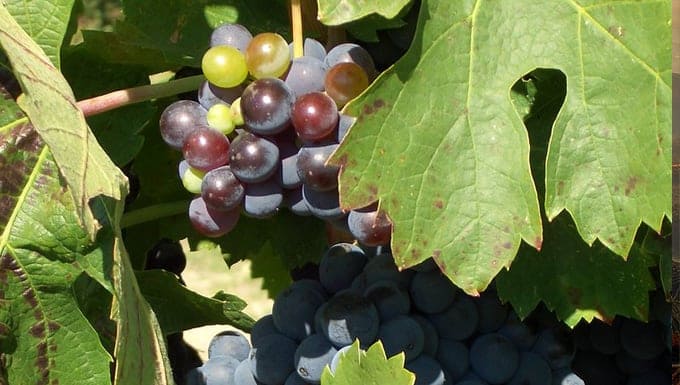
Popular wherever they go
An exceptional Spanish red grape, Cariñena is of course the main variety used in wines from the D.O. Cariñena. It is also heavily used in the D.O.Ca.Rioja under the name Mazuelo to enhance other wines made with Tempranillo and Garnacha. Likewise in Catalonia, in the Priorat, Montsant and Tarragona Denominations of Origin, is it commonly used under the name Samsó. The variety is know as ‘carignan’ in French; ‘carignano’, in Italian and ‘carignane’, in English, and it grows in many countries like France, Italy, Chile, Mexico, South Africa and the United States, even China.
Its strong popularity is mainly down to its amazing yield in the vineyard, with an average of 200 hl / ha. And although it is sensitive to diseases like rot, powdery mildew, mildew and grape worms, it grows perfectly in places with good conditions. So being an exceptional Mediterranean variety, it will grow well in a warm and relatively dry climate and on poor, slate soils.
Intensity in all its forms
The Cariñena variety is mostly characterised by providing colour and high alcohol content. These are two strong attributes that produce musts with a high content of astringent tannins, good acidity and bitter and herbaceous aromas.
Although Cariñena can be a difficult variety for producers due to its high acidity, tannins and astringency, it is perfect for use in coupages or aged wines. Using this variety can be a great way to bring intensity to a coupage. This is clear to see in wines made in the D.O.Ca Rioja and the D.O.Q. Priorat. The variety brings structure, texture and a long life to the wine. And the more ripe the grape is, the more the harshness and bitterness are smoothed out. The wine becomes intense in colour, with violet floral aromas and an extraordinary silkiness.
The Cariñena story
If this variety if famous for one reason, it is because of how popular it has become in Spain. Traditionally, the variety has been commonly used in Rioja coupages, becoming popular throughout the Mediterranean basin. For the French it was love at first sight. They initially had great success growing it in Algeria, who were their main supplier. But after Algerian independence, they began to plant at home between the eastern Pyrenees and the Aude region. It experienced such growth that in 1988 it became the most widely planted variety in France with a total of up to 167,000 hectares of Cariñena. This heavy growth did not go down well with the European Union, who were keen to see crop diversity. That started an intense regime of removing these vines in France in exchange for good subsidies for winegrowers. The effect was immediate. Cariñena lost its supremacy and was soon overtaken by Merlot, which is now the most widely planted variety in France.
A variety that everyone loves
A grape that travels around the world is not immune to change. As with other varieties like the Pinot Noir and Garnacha, the Cariñena grape has mutated in a way that has generated white and rosé versions. The Cariñena Blanca variety was discovered at the beginning of the 20th century in the Roussillon area (France) and produces white wines with a lot of body, subtle aromas, a high alcohol content and high acidity. Likewise, the Cariñena Gris is a dark pink grape variety found in small quantities in inland Perpignan, producing fresh, simple wines with good minerality. This is a variety in decline, perhaps for being a late ripening grape, even in hot weather, which means it is not as commercially viable for winegrowers compared to other varieties.
But as well as mutating to new versions, Cariñena is a very versatile grape when crossed with other varieties. This is clear to see in some new varieties made with Cariñena, for example a cross with the Cabernet Sauvignon variety has produced Ruby Cabernet and with Cabernet Sauvignon and Garnacha it has created the Carnelian variety.
In short, the Cariñena grape and its intensity is not bound by borders. This is a cosmopolitan variety that travels all over the world and leaves a mark wherever it goes. Why not experience it for yourself with the wide variety of Cariñena wines available from Decántalo. Maximum intensity in one click.
Image by Allie Caufield.
Original source Flickr.


